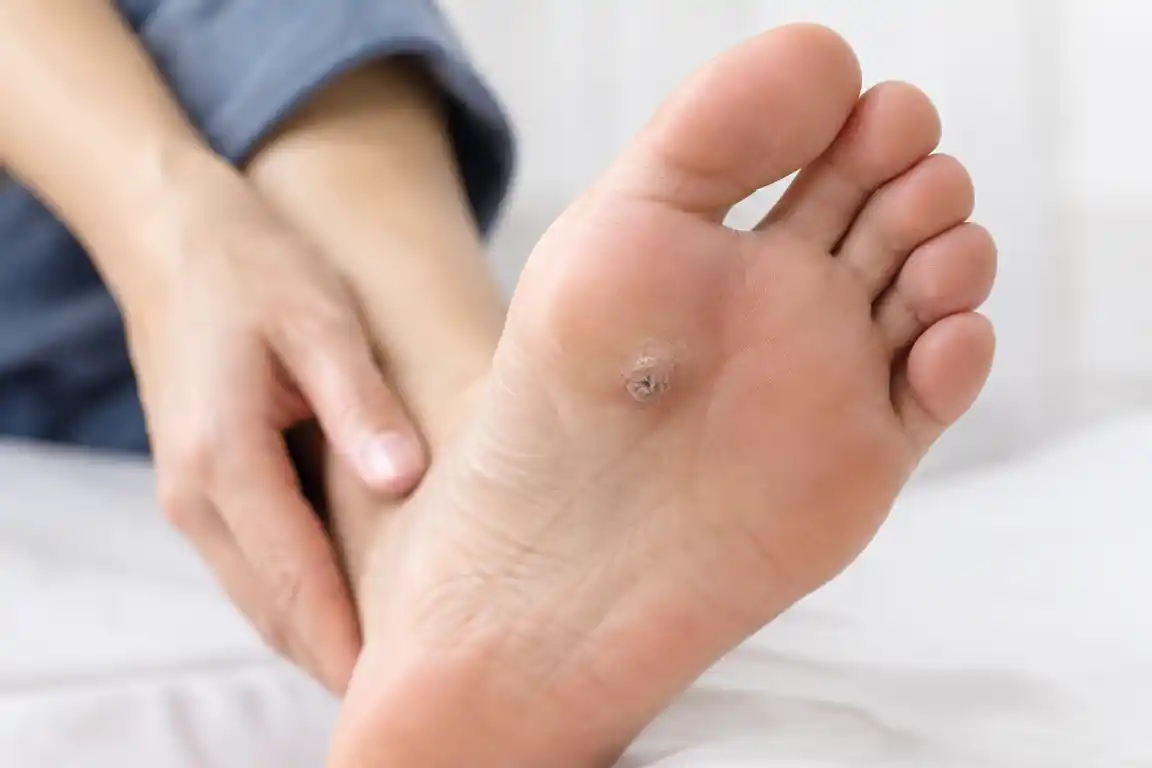
Plantar warts are small, rough growths on the bottom of the foot caused by a common virus. They're harmless, but they can hurt when you walk and are easy to mistake for a callus. Our podiatrists diagnose and treat plantar warts at our offices in Metairie, Covington and Prairieville.
A plantar wart is a wart that grows on the sole of the foot, which doctors call the plantar surface. Plantar warts usually show up on areas that carry weight, like the heel or the ball of the foot. Because you walk on them, they get pressed into the skin and covered by a layer of hard skin, instead of sticking out like warts elsewhere.
Some appear as a cluster of small warts close together, called mosaic warts.
Plantar warts are caused by the human papillomavirus (HPV), which gets in through tiny cuts or breaks in the skin on the bottom of your foot. The virus lives only in the skin and doesn't spread through the bloodstream. It thrives in warm, damp places like shower floors, locker rooms and pool decks.
Anyone can get plantar warts, but they're most common in children and teens, people who often walk barefoot in shared spaces, and people with a weakened immune system. Not everyone who's exposed to the virus develops a wart.
Plantar warts can be hard to spot at first. Common signs include:
If a spot on your sole matches these signs and doesn't improve in a few weeks, it's worth having it checked.
Plantar warts are often mistaken for calluses or corns, because all three can look like thick, hard skin. A simple clue is how they hurt. A wart usually hurts when you pinch it from the sides, while a callus or corn hurts more when you press straight down on it.
A wart often has tiny black dots and interrupts the normal lines of your skin. Corns and calluses form from pressure or friction, have no black dots, and the skin lines run through them. If you're not sure, a podiatrist can tell the difference during a quick exam.
Treatment helps when a wart is painful, spreading or not going away.
Common treatments include salicylic acid, which peels the wart away a layer at a time and works when used consistently for several weeks, and freezing with liquid nitrogen in the office, which may take a few sessions. For stubborn warts, our podiatrists also offer prescription-strength acid, immunotherapy injections and minor surgical removal.
See our wart removal page for a closer look at each option and what to expect.
These habits help prevent plantar warts and keep them from spreading:
If someone in your home has plantar warts, these steps also help protect the rest of the family.
See a podiatrist if a wart is painful, keeps coming back, spreads or doesn't respond to home treatment. If you have diabetes, poor circulation or reduced feeling in your feet, don't treat warts at home. Have them checked instead.
Also get checked if a growth bleeds, changes in color or shape, or you're not sure it's a wart, since a few other skin growths can look similar.
Our podiatrists treat plantar warts at our offices in Metairie, Covington and Prairieville. For other skin problems on the feet, see our Skin Conditions page.
Yes, mildly. The virus spreads through direct contact, or when you walk barefoot on surfaces where it lives, such as shower floors. Not everyone who's exposed gets a wart.
No. Plantar warts aren't a form of cancer and are usually harmless. The main problem is pain, which can change the way you walk. If a growth looks unusual, have it checked.
No. The black dots that look like roots are tiny blood vessels. Warts get pushed inward by the pressure of walking, so they can seem deep. Trying to dig or pull one out can damage the skin, cause an infection and spread the virus.
Often, yes, especially in children, but it can take months to a couple of years. Treatment can speed things up if the wart is painful or spreading.
Yes. Touching or picking a wart can spread it to other parts of your foot or to your hands. Washing your hands after touching a wart helps prevent this.
A podiatrist can confirm whether it's a plantar wart, a corn or a callus, and recommend the right treatment.
